Cheonjamun (천자문): The Classical Primer
What it is
The Cheonjamun (千字文) — literally "thousand-character text" — is a 6th-century classical Chinese poem composed by Zhou Xingsi during the Liang Dynasty. Every one of its 1,000 characters is unique, arranged in 250 lines of 4 characters each. The text covers cosmology, ethics, history, and natural philosophy.
In Korea, it was the standard first hanja primer from the Three Kingdoms period through the early 20th century — over 1,500 years of continuous use.
Why it shaped Korean literacy
- Unique characters: each child learned 1,000 distinct hanja without repetition.
- Poetic structure: 4-character lines were easy to memorize and recite.
- Cultural content: classical references prepared students for further Confucian education.
- Dual reading tradition: each character taught with both 음 (Sino-Korean pronunciation) and 훈 (native Korean meaning gloss), e.g. 天 → 하늘 천.
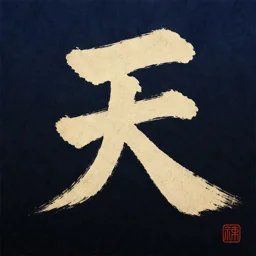
Chunja: walk through all 1000 charactersCalligraphy, audio, and spaced repetition — classically paced.
Get
Is it still worth learning today?
Korean is written in hangul. You can live in Korea without reading a single hanja. So why bother?
- Vocabulary etymology. ~60% of Korean vocabulary is Sino-Korean. Knowing hanja makes vocabulary self-explaining: 학교 (學校) = "learn" + "school" = school.
- Academic and legal texts still use hanja in disambiguating brackets.
- Korean names — every Korean given name corresponds to specific hanja with meaning.
- Reading East Asian classics opens up Chinese, Japanese, Vietnamese (chữ Hán-Nôm) classical texts with significant transfer.
How to approach it
- Start with the first 100 characters (天, 地, 玄, 黃, 宇, 宙, 洪, 荒...). The opening 8 alone teach you "heavens and earth are dark and yellow; the universe is vast and chaotic."
- Pace: 5 characters per day, fully (writing + audio + meaning). 100 characters take 20 days.
- Don't aim for all 1000. The first 300–500 carry 80% of the practical value.